ResearchSaturday, February 28, 2026

AI Construction Equipment Rental Intelligence: The $36 Billion Infrastructure Fleet Marketplace

India's construction equipment market will hit $36 billion by 2035, yet rentals remain trapped in phone calls, handshake deals, and idle assets. An AI-native rental intelligence platform could capture the gap between $17 billion in equipment and the 62% of contractors who prefer renting but can't find what they need.

1.

Executive Summary

India's construction equipment rental market is a paradox: massive demand meets massive fragmentation. With over 70 million construction workers, $150+ billion in active infrastructure projects, and government initiatives pumping billions into roads, metros, and smart cities—the equipment rental sector should be thriving on digital rails.

Instead, it's trapped in the 1990s.

Contractors still make 15-20 phone calls to find an excavator. Fleet owners watch $500,000 machines sit idle for weeks. Pricing is opaque, determined by relationships rather than market dynamics. Maintenance is reactive—wait for breakdown, then scramble.

This represents a structural opportunity for an AI-native construction equipment rental marketplace that applies telematics, dynamic pricing, and predictive intelligence to a $17+ billion market growing at 6.7% CAGR.

The thesis: The contractor who finds equipment in 2 hours instead of 2 days wins the bid. The fleet owner whose utilization jumps from 55% to 85% doubles profitability. The platform that enables both captures a network effect in heavy machinery.
2.

Problem Statement

The Discovery Problem

A contractor in Pune needs a 20-ton excavator for a 45-day infrastructure project. Today's process:

  • Call 3-5 known rental contacts
  • If unavailable, ask for referrals
  • Spend 2-3 days reaching 15+ suppliers
  • Compare inconsistent quotes (daily vs. monthly vs. shift-based)
  • Negotiate individually with each
  • Hope the equipment actually arrives on the promised date
  • Time wasted: 3-5 working days per equipment need Opportunity cost: Delayed project starts, missed bids

    The Utilization Problem

    Fleet owners face the inverse challenge. A rental company in Hyderabad owns 50 pieces of heavy equipment worth ₹40 crore ($4.8M). Reality:

    • Average utilization: 55-60%
    • Idle equipment: 20+ units at any time
    • No visibility into market demand
    • Pricing based on gut feel
    • Maintenance: reactive (breakdown-based)
    Revenue leaked: 25-30% of potential rental income

    The Trust Problem

    Unlike B2C transactions, B2B equipment rental involves:

    • High-value assets ($10,000 - $500,000+ per unit)
    • Extended rental periods (weeks to months)
    • Damage/liability risks
    • Payment terms (often 30-60 day cycles)
    • No standardized contracts
    Applying Zeroth Principles: What do we assume about equipment rental that might be wrong?

    We assume rental is fundamentally a local, relationship business. But what if the relationship isn't with a person—it's with verified data? If a platform could provide equipment history, maintenance records, operator certifications, and insurance coverage, would contractors still need the "trusted local guy"?


    3.

    Current Solutions

    CompanyWhat They DoWhy They're Not Solving It
    Equipment Rentals IndiaListings marketplace for construction equipmentClassifieds model—no transactions, no telematics, no dynamic pricing
    ConeonEmerging rental platformLimited geographic coverage, basic booking—no AI or utilization optimization
    Equipments DekhoHeavy equipment aggregatorDirectory-style listings, no real-time availability, no transaction layer
    Traditional rental companiesLocal fleet owners, dealer networksFragmented, relationship-driven, no digital presence
    Infra.MarketConstruction materials marketplaceAdjacent market (materials not equipment), validates digital infra demand

    International Models Worth Studying

    CompanyMarketModelKey Innovation
    EquipmentShareUSAFull-stack rental + SaaSTelematics (Track), fleet management software, operator marketplace
    BigRentzUSARental aggregatorUnified booking across 8,000+ suppliers, standardized pricing
    United RentalsUSAEnterprise rentalProcore integration, telematics for project visibility
    DozrCanadaOnline rental marketplaceReal-time availability, instant booking, verified suppliers
    Gap Analysis: No Indian player combines:
    • Real-time availability
    • Dynamic, market-based pricing
    • Telematics/IoT integration
    • Predictive maintenance
    • Transaction + payments layer
    • Insurance/compliance bundling

    4.

    Market Opportunity

    Market Size

    Segment2024-25 Value2034-35 ProjectionCAGR
    India Construction Equipment (Total)$17.5 billion$36 billion6.7%
    India Rental Segment$5.1 billion~$10 billion4.5-6%
    Global Rental Market$130 billion$180 billion4.2%

    Market Structure

    • Excavators: 30% of rental demand (highest utilization)
    • Heavy Equipment: 64% of market
    • North India: 30% regional share (Delhi NCR, Punjab, Haryana)
    • Rental Preference: 62% of SME contractors prefer rental over ownership

    Why Now?

    Applying Anomaly Hunting: What's strange about this market that doesn't fit?
  • Infrastructure Spending Surge: ₹10 lakh crore ($120B) allocated in 2024-25 budget for infrastructure
  • Telematics Adoption: 36% growth in telematics-enabled equipment
  • Digital Transaction Shift: 43% of rental transactions now initiated digitally
  • SME Contractor Growth: 70% of projects involve contractors who can't afford equipment ownership
  • OEM Digital Push: JCB, Caterpillar, Komatsu all launching digital rental initiatives
  • The anomaly: Despite digital readiness indicators, no platform has captured the transaction layer. Why?

    Hypothesis: The market has been waiting for someone to solve trust + logistics simultaneously. Listings alone don't work because verification and delivery are the actual pain points.
    5.

    Gaps in the Market

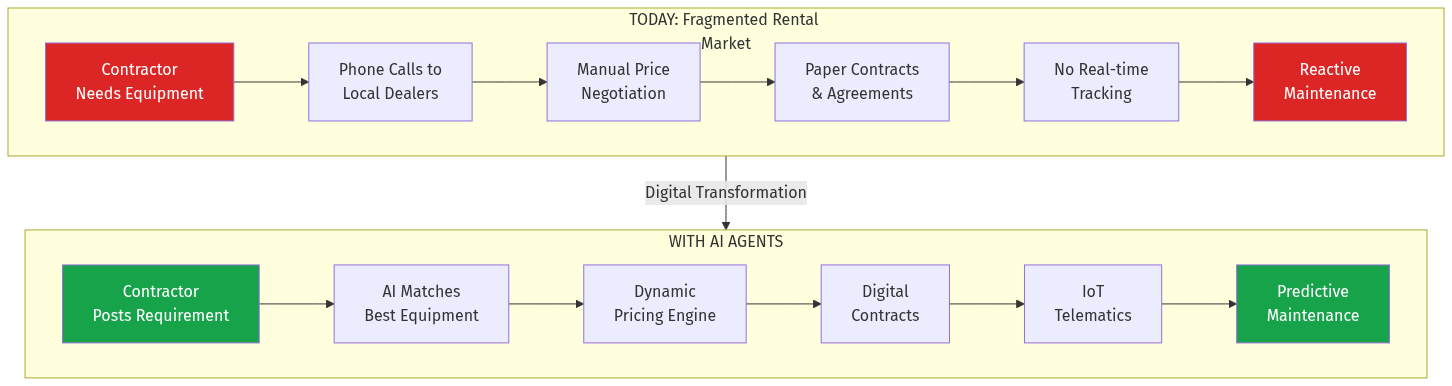
    Current vs Future State
    Current vs Future State

    Gap 1: Real-Time Availability Intelligence

    Current state: "I'll check and call you back" (average response: 4-6 hours) Opportunity: Live inventory with location, condition, and estimated availability windows

    Gap 2: Dynamic Market Pricing

    Current state: Opaque, negotiation-based, varies 30-40% for same equipment Opportunity: Transparent pricing based on demand signals, utilization rates, and seasonal patterns

    Gap 3: Telematics Integration

    Current state: <10% of rental equipment has IoT tracking Opportunity: Real-time location, usage monitoring, predictive maintenance alerts

    Gap 4: Verification & Trust Layer

    Current state: Word-of-mouth, hope-based due diligence Opportunity: Equipment history, maintenance logs, operator certifications, insurance verification

    Gap 5: Bundled Services

    Current state: Equipment-only rental, customer handles transport/operators/insurance Opportunity: Full-service bundles: equipment + operator + insurance + transport + maintenance
    6.

    AI Disruption Angle

    Applying Distant Domain Import: What other industry has solved structurally similar problems? Airline Revenue Management: Dynamic pricing based on demand, time-to-departure, seat inventory. Equipment rental has identical dynamics—time-to-project, equipment availability, regional demand. Uber's Surge Pricing: Real-time demand signals adjusting price and supply allocation. Equipment rental could implement similar mechanics for peak construction seasons. Predictive Maintenance in Aviation: Airlines don't wait for engine failure. Telematics + AI predicts component wear. Construction equipment (averaging $100K+ per unit) deserves the same treatment.

    AI Agent Capabilities

    AI FunctionApplicationBusiness Impact
    Equipment MatchingNLP-based requirement parsing → inventory matching70% reduction in search time
    Dynamic PricingDemand signals + utilization data → optimal pricing15-20% revenue lift for fleet owners
    Predictive MaintenanceTelematics data → failure prediction30% reduction in unplanned downtime
    Demand ForecastingProject pipeline data → fleet planningBetter capital allocation
    Risk ScoringContractor history + project analysis → credit decisionsReduced payment defaults
    Utilization OptimizationCross-fleet analysis → redeployment recommendations25-30% utilization improvement

    The AI Agent Transaction Flow

  • Contractor inputs: "Need 2 excavators, 20-ton, Pune, March 15 to April 30"
  • AI processes: Parses requirement, checks availability across 500+ fleet owners
  • AI recommends: Top 5 matches with dynamic pricing, delivery estimates, operator options
  • Contractor selects: Digital contract generated, insurance bundled, payment terms set
  • During rental: Telematics monitors usage, predicts maintenance needs
  • AI alerts: "Hydraulic system showing early wear—schedule service at Day 32 to avoid breakdown"
  • Post-rental: Equipment returned, usage reconciled, ratings updated

  • 7.

    Product Concept

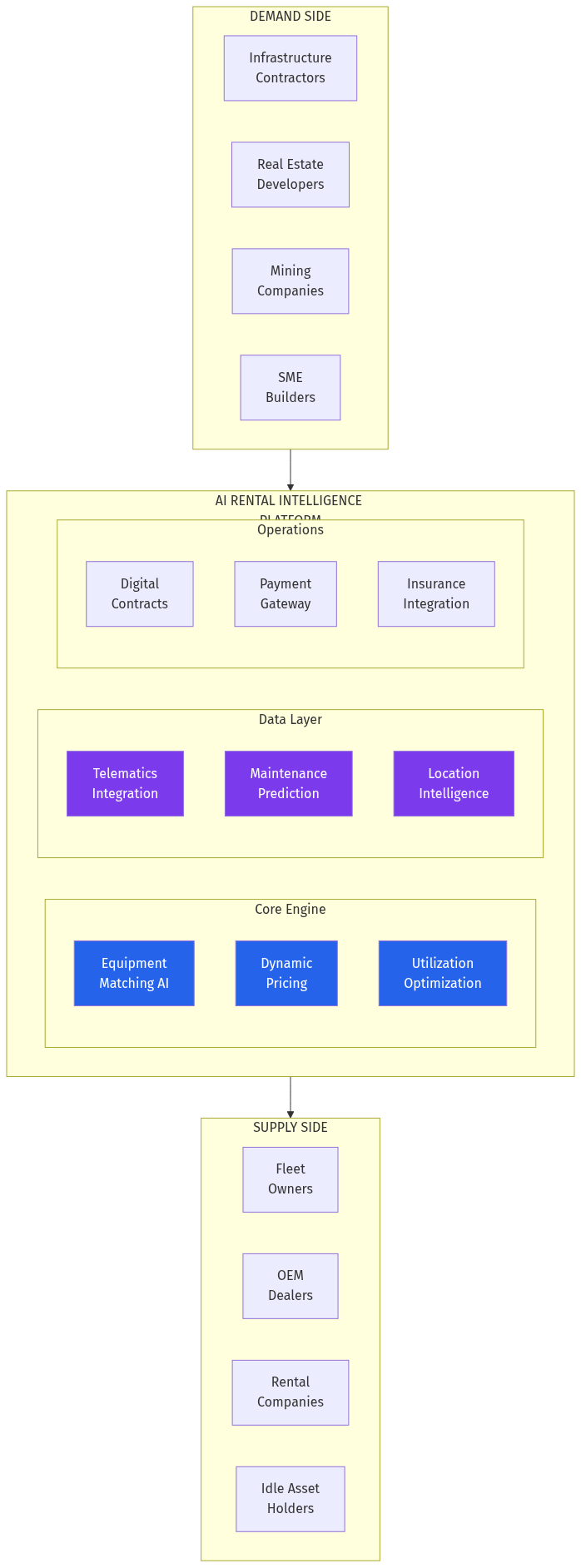
    Platform Architecture
    Platform Architecture

    Core Platform Components

    For Contractors (Demand Side):
    • Instant equipment search with real-time availability
    • AI-powered recommendations based on project scope
    • Transparent pricing with market comparisons
    • Digital contracts with e-signatures
    • Equipment tracking dashboard
    • Bundled services: operators, transport, insurance
    • Credit line / payment terms based on history
    For Fleet Owners (Supply Side):
    • Fleet management dashboard
    • Dynamic pricing suggestions based on market demand
    • Telematics integration for all equipment types
    • Maintenance scheduling and predictions
    • Utilization analytics and benchmarking
    • Payment collection and reconciliation
    • Market demand signals for fleet expansion decisions
    Platform Intelligence Layer:
    • Real-time inventory aggregation
    • Demand forecasting by region/equipment type
    • Price optimization engine
    • Risk/credit scoring
    • Maintenance prediction models
    • Market intelligence reports

    Differentiation vs. Listings

    FeatureClassifieds (Current)Full-Stack Rental Intelligence
    AvailabilityUnknown until you callReal-time, verified
    PricingNegotiationDynamic, transparent
    BookingOfflineDigital, instant
    TrackingNoneFull telematics
    PaymentsOfflinePlatform-facilitated
    TrustReputation-basedData-verified
    MaintenanceReactivePredictive
    ---
    8.

    Development Plan

    PhaseTimelineDeliverables
    MVP12 weeksSingle-city pilot (Hyderabad/Bangalore), 50 fleet partners, basic matching + booking, WhatsApp-based contractor interface
    V1+16 weeksMulti-city expansion (5 metros), telematics integration pilot, digital contracts, payment gateway
    V2+20 weeksDynamic pricing engine, predictive maintenance beta, operator marketplace, insurance integration
    V3+24 weeksFull AI recommendation system, credit scoring, fleet financing partnerships, pan-India rollout

    Technical Stack

    • Frontend: Progressive web app (contractors often on mobile), WhatsApp Business API integration
    • Backend: Event-driven architecture for real-time inventory
    • Telematics: Integration with major providers (Samsara, Trackunit) + custom IoT for untracked equipment
    • AI/ML: Demand forecasting, pricing optimization, maintenance prediction
    • Payments: Razorpay/PayU for transactions, BNPL integration for rental financing

    9.

    Go-To-Market Strategy

    Phase 1: Supply Aggregation (First 6 months)

  • Target: Top 100 fleet owners in 2 metros (Hyderabad + Bangalore)
  • Value prop: "List your equipment, we bring customers, you keep 90%"
  • Onboarding: Free telematics device installation for fleet >10 units
  • Incentive: Zero commission first 3 months
  • Phase 2: Demand Generation (Months 4-12)

  • Target: EPC contractors, infrastructure companies, real estate developers
  • Channel: Direct sales team + WhatsApp-based ordering
  • Hook: "Find any equipment in 2 hours or we refund your time"
  • Retention: Credit lines for repeat customers
  • Phase 3: Network Effects (Months 12-24)

  • Expand: 20 cities, 1,000+ fleet partners
  • Services: Operator marketplace, financing, insurance
  • Data products: Market intelligence reports for OEMs
  • Partnerships: JCB, Caterpillar, Komatsu dealer networks
  • Geographic Prioritization

    PriorityRegionsRationale
    Tier 1Hyderabad, Bangalore, PuneHigh infra spend, tech-savvy contractors
    Tier 2Delhi NCR, Chennai, MumbaiMassive project volume, established rental markets
    Tier 3Ahmedabad, Kolkata, LucknowEmerging infra corridors
    ---
    10.

    Revenue Model

    Primary Revenue Streams

    StreamModelEstimated Take Rate
    Transaction Commission% of rental value8-12%
    Subscription (Fleet Owners)SaaS for fleet management + telematics₹10K-50K/month per fleet
    Subscription (Contractors)Priority booking, credit lines₹5K-20K/month
    Telematics HardwareDevice + installation₹15K-30K per unit
    FinancingBNPL/credit partnerships2-3% of financed amount
    InsuranceEmbedded coverage10-15% of premium
    Data ProductsMarket intelligence for OEMsEnterprise contracts

    Unit Economics (Target)

    MetricTarget
    Average rental value₹1,50,000 ($1,800)
    Take rate10%
    Revenue per transaction₹15,000 ($180)
    Transactions per fleet owner/month3-5
    LTV per fleet owner₹5,40,000 ($6,500)/year
    CAC per fleet owner₹50,000 ($600)
    LTV:CAC10.8x
    ---
    11.

    Data Moat Potential

    Data Moat Flywheel
    Data Moat Flywheel

    Proprietary Data Assets

    Data TypeSourceCompetitive Value
    Utilization BenchmarksAggregated telematicsOnly platform knowing true utilization rates by equipment type/region
    Maintenance PatternsIoT sensors + service recordsPredictive models for equipment lifespan
    Pricing IntelligenceTransaction historyMarket-rate database for dynamic pricing
    Demand SignalsProject announcements + search patternsForward-looking demand forecasting
    Contractor CreditworthinessPayment history + project completionRisk scoring unavailable elsewhere
    Equipment PerformanceCross-fleet comparisonsOEMs would pay for this data

    Network Effects

    Same-side effects (Supply):
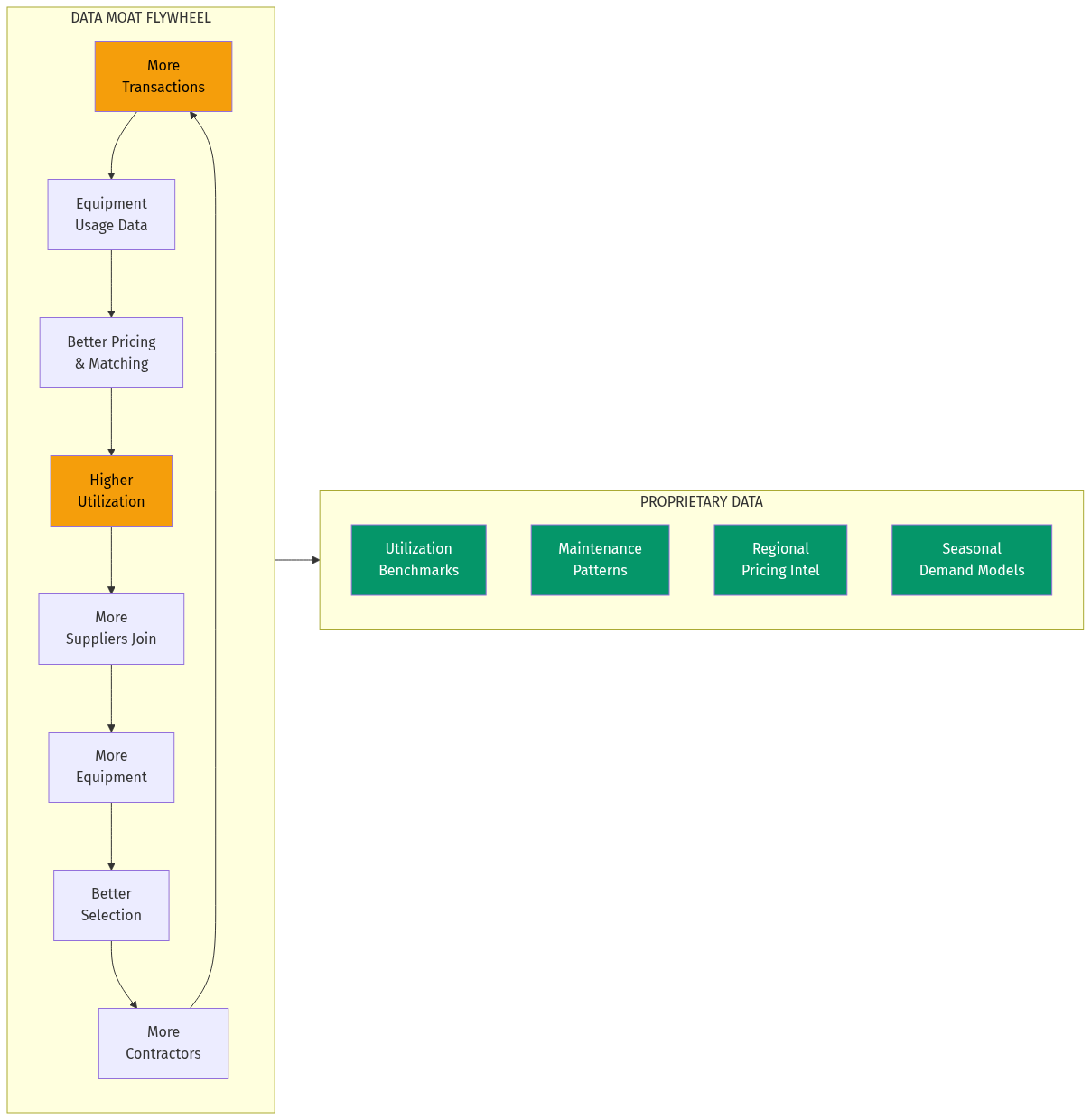
    • More equipment → better availability → more contractors → more demand → more fleet owners join
    Cross-side effects:
    • More verified fleet data → better matching → higher utilization → fleet owners earn more → they add more equipment
    Data effects:
    • Every transaction improves pricing models
    • Every rental improves maintenance predictions
    • Every search improves demand forecasting

    Why This Is Defensible

    Applying Steelmanning: What's the best argument AGAINST this being an opportunity? Bear case: "IndiaMART or Infra.Market could add equipment rental and crush any startup." Counter-steelman:
  • Equipment rental requires operational depth (logistics, verification, telematics) that listing platforms lack
  • Infra.Market's model (materials) is fundamentally different—low-value, high-frequency vs. high-value, low-frequency
  • First-mover in telematics integration creates switching costs
  • The data moat compounds—year 2 data is worth 10x year 1 data for predictions

  • 12.

    Why This Fits AIM Ecosystem

    Direct Alignment

  • B2B Discovery Gap: Contractors can't find equipment; fleet owners can't find customers. Classic AIM problem.
  • Structured Data Opportunity: Equipment specifications, availability, pricing—all can be structured for AI consumption.
  • Agent-Native Transactions: Perfect for AI agents to handle end-to-end: discover → compare → book → monitor → pay.
  • Vertical Integration Path: Start with equipment, expand to materials (Infra.Market competitor), operators, project management.
  • Cross-Vertical Synergies

    AIM VerticalSynergy
    RCC Pipes/Construction MaterialsSame buyers (contractors), bundled procurement
    Industrial ServicesMaintenance providers, operator training
    LogisticsEquipment transport coordination
    Financial ServicesEquipment financing, insurance

    Platform Positioning

    This could be AIM's "hero vertical"—the most complex, highest-value B2B transaction category. If AIM can enable AI agents to rent a $200,000 excavator with full telematics and insurance, everything else becomes easier.


    ## Verdict

    Opportunity Score: 8.5/10

    Scoring Breakdown

    CriteriaScoreRationale
    Market Size9/10$17B+ market, 6.7% CAGR, massive infra tailwinds
    Fragmentation9/10Thousands of local players, no dominant platform
    AI/Agent Fit9/10Perfect for telematics, dynamic pricing, predictive maintenance
    Timing8/10Digital readiness high, but adoption still early
    Moat Potential8/10Strong data network effects, telematics lock-in
    Execution Risk7/10Heavy ops component, trust-building takes time
    Competition Risk7/10Large platforms could enter, but operational depth required

    Pre-Mortem: Why This Could Fail

    Applying Falsification:
  • Fleet owner resistance: "We've done business on relationships for 30 years. Why change?"
  • - Mitigation: Start with tech-forward fleet owners, prove utilization gains
  • Working capital intensity: High-value transactions mean payment delays hurt
  • - Mitigation: Escrow model, financing partnerships from day 1
  • Telematics installation friction: Fleet owners won't want devices on equipment
  • - Mitigation: Free installation, demonstrate maintenance savings
  • Geographic fragmentation: What works in Hyderabad might not work in Lucknow
  • - Mitigation: City-by-city playbook, local ops teams
  • IndiaMART incumbency: They could decide equipment rental is strategic
  • - Mitigation: Move fast, build telematics moat they can't easily replicate

    Final Assessment

    India's construction equipment rental market is a textbook "offline-to-online" opportunity with AI-native characteristics. The combination of massive market size, extreme fragmentation, clear value creation (utilization improvement), and defensible data moat makes this a compelling vertical for the AIM ecosystem.

    The winner will be whoever solves trust (verification) and logistics (delivery/tracking) simultaneously—not just listings. An AI-native platform that owns the transaction layer, integrates telematics, and builds a pricing intelligence moat could become the "operating system" for India's infrastructure equipment market.

    Recommendation: High-priority vertical for AIM ecosystem development. Consider strategic partnership with a telematics provider (Samsara, Trackunit) and pilot with 50 fleet owners in Hyderabad/Bangalore corridor.

    ## Sources