Industrial calibration—the process of verifying measurement instruments against certified standards—is a $5.7 billion global market growing to $8.1 billion by 2030. It's also one of the most fragmented, opaque, and manually-managed B2B services in existence.
Every pharmaceutical plant, food manufacturer, automotive factory, and aerospace facility must calibrate thousands of instruments: temperature sensors, pressure gauges, weighing scales, flow meters, dimensional tools. Miss a calibration window? Risk product recalls, failed audits, or regulatory shutdown.
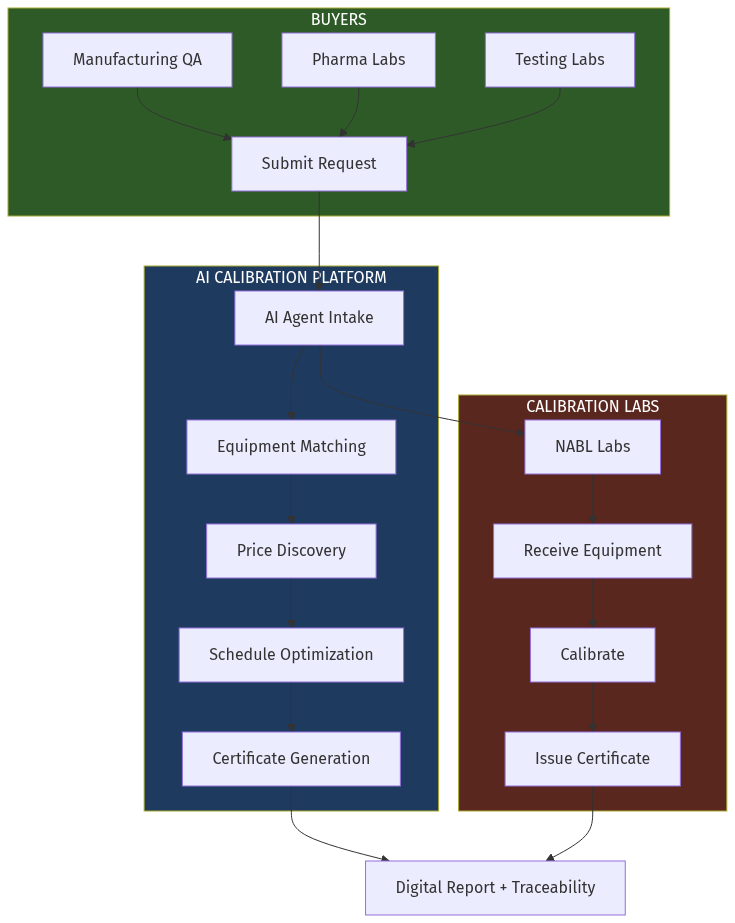
Yet procurement of these services happens through phone calls, email chains, and Excel spreadsheets. There's no marketplace. No price transparency. No automated scheduling. No AI-driven optimization.
This is a classic "suffering in plain sight" problem—everyone knows calibration management is painful, but no one has built the definitive platform to solve it.
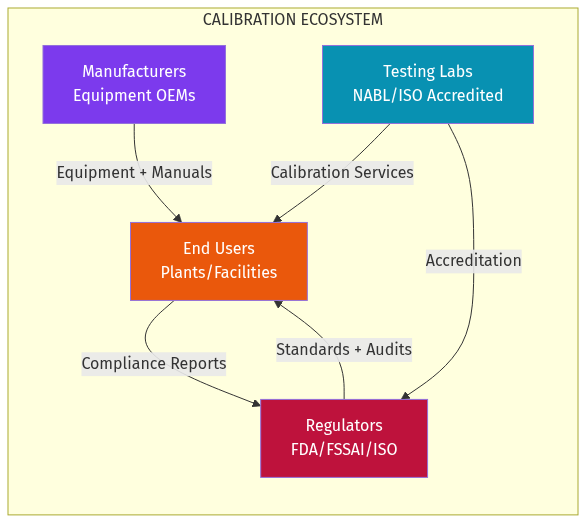
Applying Zeroth Principles: Before asking "how do we optimize calibration procurement?" we must ask: "Why does calibration exist at all?" The answer reveals a deeper truth—calibration is trust infrastructure. It's how companies prove their measurements are accurate, which underpins product quality, safety, and regulatory compliance. The service isn't just "getting instruments checked"—it's purchasing certainty.