Gap 1: Work Order Text Intelligence
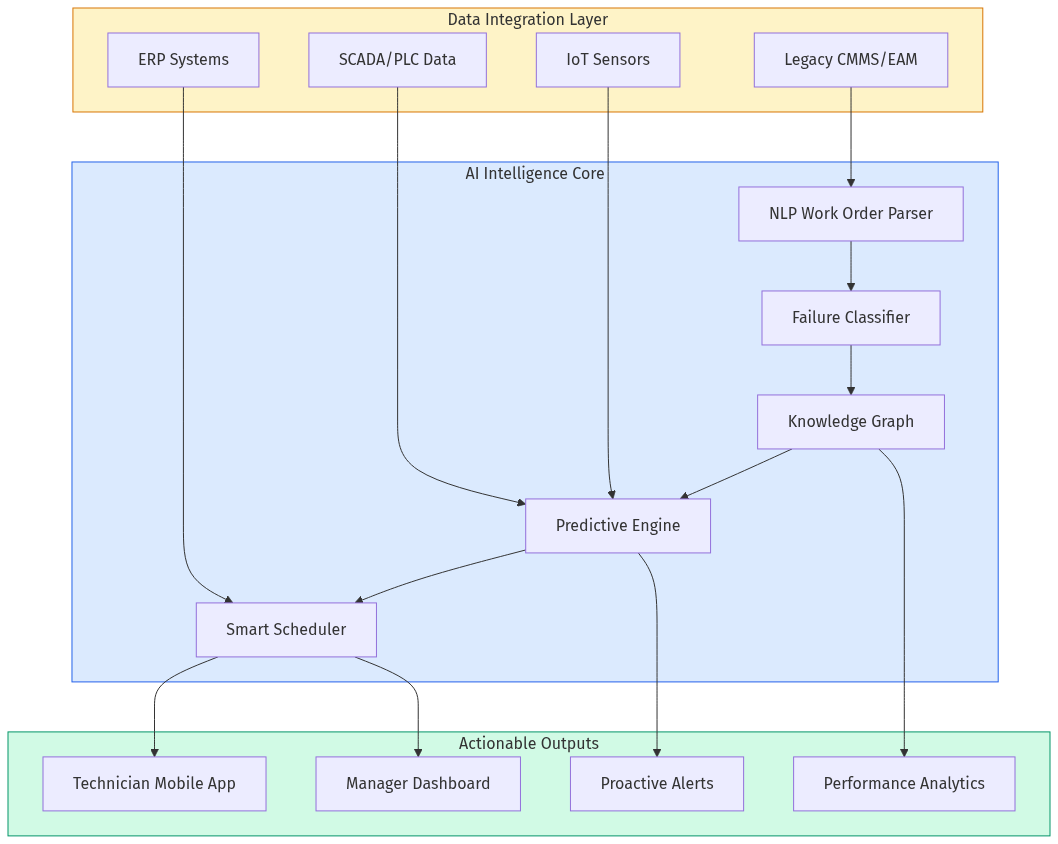
Current CMMS treats work order descriptions as dumb text fields. Reality:
"Pump 3A making grinding noise again, same as last month when Joe fixed it"
This sentence contains: equipment ID, symptom, failure pattern, historical context, tribal knowledge. None of this is structured or actionable in current systems.
Gap 2: Predictive Scheduling (Not Just Predictive Maintenance)
The industry obsesses over "predicting equipment failure." Far more valuable: predicting optimal maintenance windows, technician availability, parts inventory intersection, and production schedule conflicts.
Gap 3: Knowledge Extraction and Transfer
When a senior technician retires, decades of repair knowledge vanishes. No current system captures:
- Undocumented failure modes
- Workarounds for specific equipment quirks
- Tribal knowledge about parts substitutions
- Contextual repair sequences
Gap 4: Cross-Facility Benchmarking
A company with 15 plants has no way to know:
- Which plant has best practices for conveyor maintenance?
- Why does Plant A have 3x failure rate on the same equipment as Plant B?
- What repair techniques work best for specific failure modes?
Gap 5: Technician Enablement (Not Just Tracking)
CMMS is designed to track technicians for management. Zero tools are designed to make technicians more effective:
- No AR-guided repair assistance
- No real-time parts location
- No intelligent troubleshooting trees
- No voice-to-work-order capture
---